

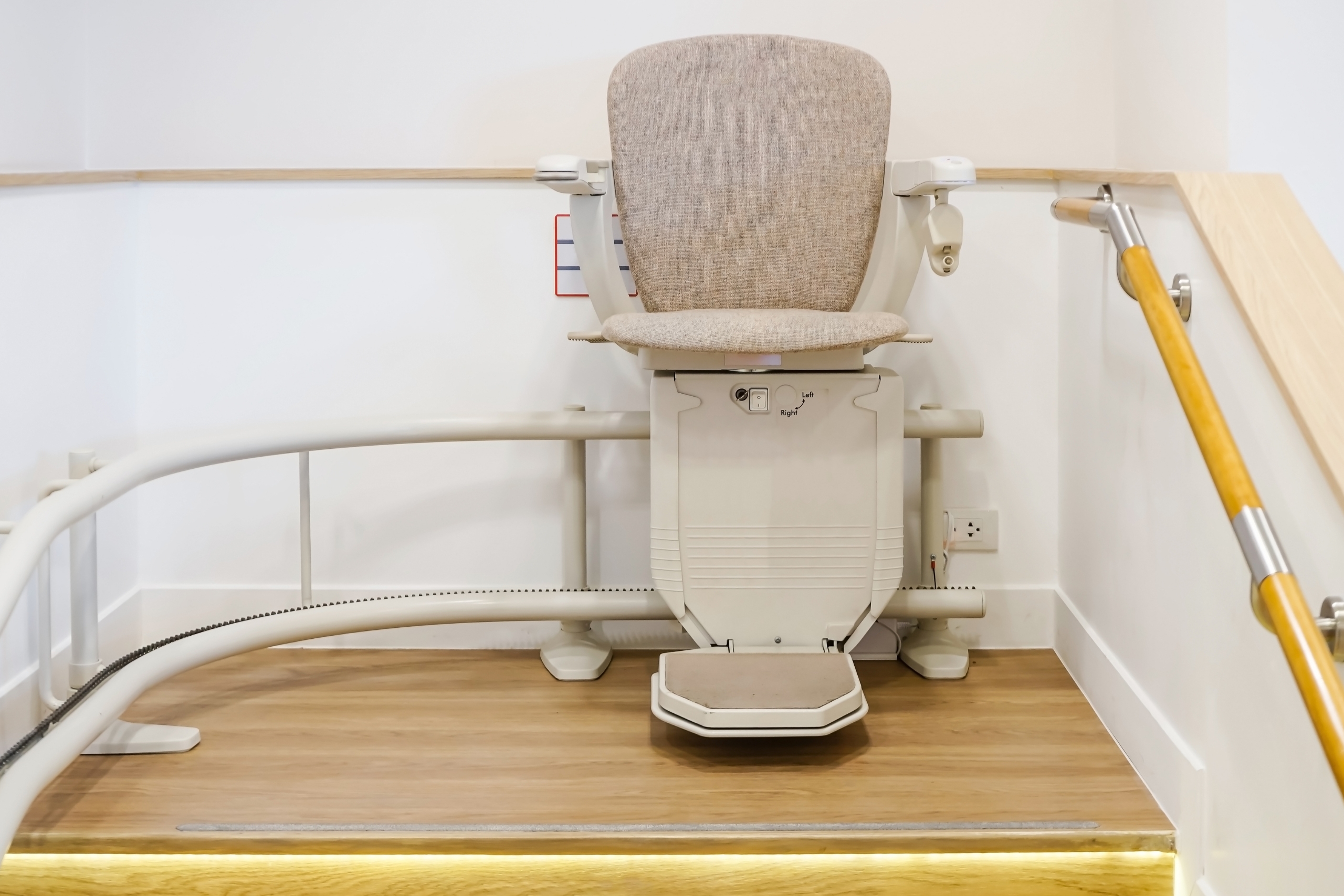
Accessibility in public buildings has moved from the margins of building management to the centre of legal obligation and ethical responsibility over the past two decades, driven by the Equality Act 2010 and a growing societal expectation that every person — regardless of their physical ability — should be able to access the spaces, services, and facilities that public and commercial buildings provide. For buildings with multiple floors, the staircase presents one of the most significant and most practically challenging access barriers, and the stairlift has established itself as one of the most widely installed and most versatile solutions to this challenge across a remarkable range of public building types. Yet for every building manager, facilities director, or property owner who recognises the need for a stairlift installation in a public building, the immediate practical question is almost always the same: how much is this going to cost? The answer — as with most meaningful building improvement questions — is that it depends on a significant number of variables that interact to produce a total project cost that can range from a few thousand pounds for a straightforward installation in a simple staircase to tens of thousands of pounds for a complex, heavy-duty, architecturally sensitive commercial installation. This guide provides the comprehensive pricing context, the key cost drivers, and the practical planning knowledge that building managers need to approach stairlift installation decisions in public settings with genuine commercial clarity and confidence.
Understanding Why Public Building Stairlift Costs Differ From Residential Installations
The most important starting point for any public building stairlift cost assessment is understanding why commercial and public building installations are fundamentally different in their pricing, specification, and procurement requirements from the residential stairlifts with which most people are more familiar. A domestic stairlift installed in a private home is typically a relatively lightweight, relatively simple device designed for the usage patterns of one or two people in a private setting, with standard weight capacities, standard safety certifications, and the relatively straightforward installation requirements of a typical residential staircase. A stairlift installed in a public building must meet an entirely different set of requirements that reflect the more demanding operating conditions of commercial and public environments.
Usage intensity is the most fundamental difference between residential and commercial stairlift applications. A residential stairlift might be used a handful of times each day by a single user — a usage pattern whose demands on the equipment are modest and whose failure consequences, while inconvenient, are limited to the private household. A stairlift in a public building may be used many dozens of times each day by a diverse range of users with different physical profiles, different weights, and different levels of familiarity with the equipment — a usage intensity that requires significantly more robust mechanical construction, more durable component materials, more powerful motors, and more sophisticated safety systems than domestic equivalents provide. Commercial stairlifts are engineered to duty cycle specifications that reflect this higher usage intensity, and the additional engineering required to meet these specifications is directly reflected in their higher unit costs relative to domestic alternatives.
Regulatory and safety compliance requirements for public building stairlifts are considerably more demanding than those applicable to domestic installations, adding further specification requirements and associated costs that residential stairlift buyers do not encounter. Commercial stairlifts in the United Kingdom must comply with BS EN 81-40, the British and European standard for stairlifts and inclined lifting platforms for use by persons with impaired mobility, as well as the broader building regulations requirements applicable to accessibility provisions in commercial and public buildings. Health and safety legislation applicable to public spaces imposes additional requirements around risk assessment, safety documentation, user instruction, and maintenance obligations that add both specification and ongoing management costs to the public building stairlift equation. Understanding these compliance requirements before any procurement activity begins is essential for any building manager, because the failure to specify compliant equipment at the outset can result in installation of equipment that subsequently fails inspection or requires costly modification to meet the standards that public building use demands.
The Key Factors That Determine Stairlift Installation Costs in Public Buildings
The total cost of a stairlift installation in a public building is determined by the interaction of several distinct cost variables, each of which can add significantly to the base equipment cost and each of which must be understood clearly to arrive at a realistic total project budget. Building managers who approach stairlift procurement with only the base equipment cost in mind consistently find that the final invoice substantially exceeds their initial expectations, and the frustration and budget management difficulties this creates are entirely avoidable through a more comprehensive understanding of the full cost picture before procurement commitments are made.
The staircase configuration is the most fundamental cost determinant, because the physical characteristics of the staircase determine which type of stairlift can be installed and how complex the installation process will be. Straight staircases — where the entire staircase runs in a single uninterrupted line without bends, curves, or intermediate landings — are the most straightforward and least expensive to equip, as straight-rail stairlift systems use standard rail components that can be cut to length on site without any custom fabrication. Curved staircases, staircases with intermediate landings, L-shaped and U-shaped staircases, and staircases with non-standard angles or dimensions require curved or custom-fabricated rail systems that are manufactured to measure for each specific installation — a process that adds both material costs and lead time relative to straight-rail installations. The cost premium for curved or custom-rail stairlift systems over straight-rail equivalents in commercial specifications typically ranges from two to four times the straight-rail equipment cost, making the staircase configuration one of the most significant individual cost variables in any public building stairlift project.
The weight capacity required for the installation is another significant cost driver, because commercial stairlifts must accommodate the full range of users who will use the equipment over its service life, including users whose weight exceeds the standard capacity of domestic stairlift models. Standard commercial stairlifts typically have weight capacities in the range of 160 to 200 kilograms, but installations in public buildings where bariatric users may require access should specify equipment with higher weight ratings — 250 kilograms or above — that requires more robust mechanical components and more powerful drive systems whose cost premium over standard-capacity models can be substantial. The number of floors the stairlift must serve adds rail length and associated costs proportionally, and particularly tall staircases may require intermediate support structures or safety features that add further to the installation cost. The power supply infrastructure available at the installation location, the structural characteristics of the staircase walls and structure, and the degree of architectural sensitivity of the building — particularly in listed buildings or heritage properties where installation must minimise structural impact — are further variables that affect total project cost in ways that can only be accurately assessed through a site-specific survey and quotation process.
Realistic Cost Ranges for Different Public Building Stairlift Installations
With the key cost variables understood, it becomes possible to provide realistic cost ranges for different categories of public building stairlift installation — ranges that reflect the genuine diversity of the projects that building managers in different settings will be planning and that provide the budget planning context needed for informed procurement and financial planning decisions. These ranges are necessarily indicative rather than definitive, because the final cost of any specific installation is determined by the site-specific factors that only a professional survey and detailed quotation can accurately quantify. However, the ranges provided here reflect the experience of commercial stairlift installations across a wide variety of public building types and configurations and provide a sound basis for initial budget planning and project feasibility assessment.
A straight-rail commercial stairlift installation in a standard public building staircase — covering a single straight flight between two floors, with standard commercial weight capacity, standard safety features, and a reasonably straightforward installation environment — typically costs in the range of four thousand to eight thousand pounds for the equipment and installation combined. This range assumes standard commercial specification rather than premium or custom elements, a straightforward installation without significant structural complications, and a power supply that is readily accessible without extensive electrical works. At the lower end of this range, budget commercial equipment from value-focused suppliers may be available, but building managers should be cautious about specifying the lowest-cost options for public use given the higher duty cycle and reliability requirements of commercial applications relative to domestic ones.
Curved-rail or custom-rail commercial stairlift installations covering a single flight with bends, curves, or an intermediate landing typically cost in the range of ten thousand to twenty thousand pounds, with the specific cost within this range determined primarily by the complexity of the staircase geometry that the custom rail must accommodate and the length of rail required. Installations spanning multiple floors, very long single flights, or particularly complex staircase configurations will typically cost more than the upper end of this range, and building managers planning stairlift access across three or more floors should budget for multiple units rather than attempting to install a single system spanning the full building height, as the mechanical and safety engineering requirements of very long travel systems significantly increase both cost and complexity. Heritage buildings and listed properties where installation must be approached with particular sensitivity to architectural impact may incur additional costs for specialist survey work, planning consultation, and the sympathetic installation methods that English Heritage and local conservation officer requirements demand.
Ongoing Maintenance Costs and Service Contract Considerations
The total cost of ownership of a public building stairlift encompasses not only the initial installation cost but the ongoing maintenance and servicing expenses that the higher usage intensity and the safety-critical nature of commercial stairlift applications make both more frequent and more substantial than those of domestic equivalents. Building managers who evaluate stairlift procurement decisions on the basis of installation cost alone are systematically underestimating the full financial commitment involved, and the service and maintenance cost picture deserves explicit consideration alongside the capital investment in any thorough financial analysis of a public building stairlift installation.
Commercial stairlifts in public buildings require regular professional servicing to maintain their safe and reliable operation under the demanding duty cycles of public use environments. Industry guidance and most reputable commercial stairlift manufacturers recommend at minimum an annual service inspection for lightly used commercial installations, with more frequent servicing — typically every six months — for installations in high-use environments or where the equipment is exposed to more demanding conditions such as outdoor or semi-outdoor locations. Annual service contracts for commercial stairlifts typically cost in the range of three hundred to six hundred pounds for standard annual servicing on a straightforward single-unit installation, with multi-unit contracts and more comprehensive service agreements — covering reactive maintenance callouts, parts replacement, and insurance-backed breakdown cover — available at higher price points that reflect the breadth and reliability of the cover provided.
The importance of maintaining a current and comprehensive service contract for public building stairlifts is not merely a matter of equipment longevity — it is a health and safety and liability management imperative whose neglect creates both regulatory compliance risk and potential personal injury liability in the event of a failure affecting a building user. Under the Lifting Operations and Lifting Equipment Regulations 1998, stairlifts used to carry persons are classified as lifting equipment and are subject to statutory thorough examination requirements — typically every six months for lifting equipment used to carry persons — that must be conducted by a competent person and documented in the equipment’s statutory examination record. Building managers who maintain their equipment under professional service agreements with reputable commercial stairlift specialists will typically find that these statutory examination requirements are addressed as part of the service contract, while those who allow service arrangements to lapse may find themselves in breach of statutory obligations whose consequences include enforcement action from the Health and Safety Executive and the personal liability implications that accompany documented non-compliance with statutory maintenance requirements for safety-critical equipment in public spaces.
Funding Sources and Financial Support for Public Building Stairlift Installations
The capital cost of stairlift installation in public buildings is a legitimate accessibility improvement investment that may be eligible for financial support through a range of funding sources that building managers should investigate before committing to full self-funding of a project. The availability of external funding varies depending on the type of building, the organisation that owns or manages it, and the specific accessibility improvement being undertaken, but the range of potentially applicable support mechanisms is broad enough that many public building stairlift installations qualify for at least partial external funding that can meaningfully reduce the capital burden on the building owner or manager.
The Access to Work scheme administered by the Department for Work and Pensions provides funding support for workplace modifications — including stairlift installations — that enable disabled employees to access and perform their roles effectively. While this scheme applies specifically to workplace settings and to the needs of identified disabled employees rather than to general public access improvements, it represents a relevant funding source for organisations whose stairlift installation is motivated at least in part by the need to provide physical access for disabled staff members. Local authority grant programmes for accessibility improvements to commercial and community buildings vary significantly in availability and scope between different local authority areas, and building managers whose properties fall within categories that local authorities prioritise for accessibility investment — including community facilities, cultural venues, and buildings providing services to older or disabled populations — should contact their local authority’s regeneration or accessibility team to investigate whether grant funding is available for their specific project.
Charitable grant programmes from organisations including the Heritage Lottery Fund for historic buildings, the National Lottery Community Fund for community facilities, and a range of disability-focused charitable foundations provide further potential funding sources for public building accessibility improvements whose eligibility criteria and application requirements vary between programmes. In the context of technology investment for accessibility, the building manager who invests the time in thorough funding source investigation before committing to full self-funding of a public building stairlift installation will frequently find that the actual net capital cost of the project is meaningfully lower than the headline installation quote suggests, and that the combination of available external support and the tax treatment of accessibility capital expenditure — which may qualify for enhanced capital allowances in some commercial contexts — makes the financial case for proceeding with a compliant and high-quality stairlift installation more favourable than the initial cost assessment might indicate.
Conclusion
The cost of installing a stairlift in a public building is a multi-dimensional question whose honest answer depends on the specific characteristics of the building, the staircase, the usage requirements, and the compliance obligations that each unique installation context presents. Realistic total project costs range from approximately four thousand pounds for the most straightforward straight-rail single-flight commercial installations to twenty thousand pounds or more for complex curved-rail systems, multi-floor access solutions, or installations in architecturally sensitive buildings, with ongoing annual maintenance and servicing adding several hundred pounds per unit per year to the total cost of ownership over the equipment’s service life. The building managers who approach these projects with the most complete understanding of the full cost picture — including installation, compliance, ongoing maintenance, and the available funding sources that may reduce the net capital requirement — are those who make the most financially sound procurement decisions and who deliver the most effective and most sustainable accessibility improvements to the users whose ability to access their buildings depends on getting those decisions right. The investment in accessible, compliant, and well-maintained stairlift provision is not merely a regulatory obligation — it is a genuine expression of the commitment to inclusion and equal access that every public building should embody, and the financial transparency that this guide provides is intended to make that commitment easier to act on with confidence.