

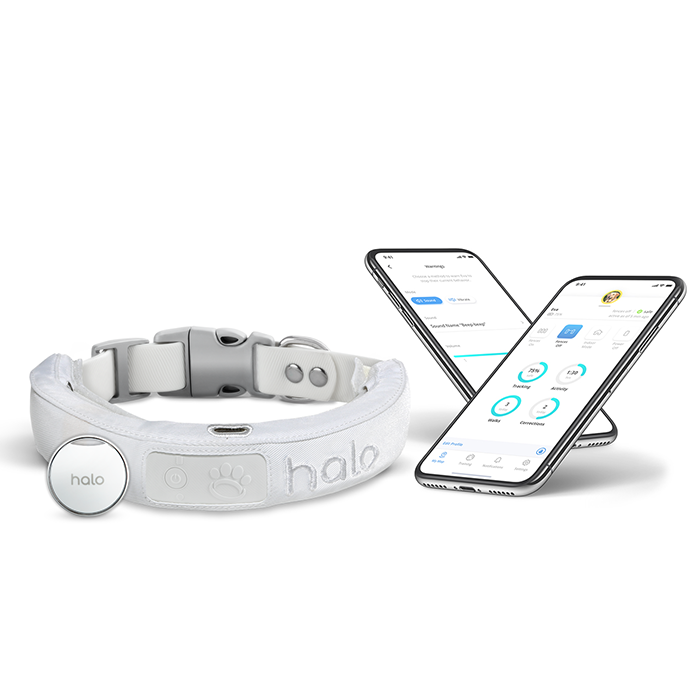
Keeping a dog safe and contained without the visual intrusion of a physical fence has long been one of the most persistently challenging aspects of responsible pet ownership for those who live on large properties, in open rural settings, or in communities where traditional fencing is restricted by aesthetic covenants or practical constraints. The Halo Dog Collar has emerged as one of the most talked-about and technologically sophisticated responses to this challenge, combining wireless boundary technology, GPS tracking, training capabilities, and smartphone connectivity into a single wearable device that its developers have positioned as a genuinely comprehensive solution to the question of how to give dogs the freedom to enjoy outdoor space while maintaining the boundaries that keep them safe. Developed with the involvement of renowned dog trainer Cesar Millan, the Halo Collar has attracted significant attention from dog owners seeking a modern, fence-free alternative to traditional containment methods. But the system is complex, the investment is substantial, and the questions that prospective buyers most need answered go considerably deeper than the marketing materials alone can address. This guide provides a thorough, honest, and practically useful introduction to the Halo Dog Collar — what it is, how it works, what it genuinely offers, and what every dog owner should understand before deciding whether it is the right choice for their pet and their specific circumstances.
Understanding the Core Technology Behind the Halo Dog Collar
The Halo Dog Collar is a GPS-enabled wireless dog containment and training system that uses a combination of satellite positioning, cellular data connectivity, and proprietary fence-mapping software to create invisible, customisable boundaries for dogs without requiring any physical infrastructure to be installed on the property. The system works by continuously tracking the dog’s GPS position relative to a set of virtual fences — called Halo Fences — that the owner defines using the Halo smartphone application, and by delivering a progressive series of alerts and deterrent signals to the dog as it approaches and potentially crosses those boundaries. The result, when the system is properly set up and the dog has been trained to respond appropriately to its signals, is a contained dog that can move freely within defined outdoor areas without the physical barrier of a traditional fence.
The GPS technology at the core of the Halo system uses a combination of GPS satellite signals and cellular network positioning to determine the dog’s location with a stated accuracy in the range of several feet under optimal conditions — a level of precision that is sufficient for boundary management in most practical applications but that can be affected by environmental factors including dense tree canopy, tall structures that interrupt satellite signal, and geographic features that influence GPS reception quality. The collar itself is a substantial piece of hardware that incorporates GPS and cellular communication modules, a rechargeable battery, and the feedback delivery mechanism through which the collar communicates with the dog — a combination of audible tones, vibration, and if configured to do so, static stimulation that the owner can adjust across a range of intensity levels to suit the individual dog’s temperament and responsiveness.
The Halo Fence mapping system is one of the most practically important and genuinely innovative aspects of the overall product, allowing owners to define up to twenty custom wireless fences of various shapes and sizes using the smartphone application’s GPS-based mapping interface. This flexibility means that the system can be configured to reflect the actual layout of any property — defining different boundaries for different areas, allowing access to some zones while excluding others, and adjusting fence configurations as circumstances change — in a way that a physical fence simply cannot match. Each fence can be set to different levels of response, and the system’s ability to automatically detect when the dog has entered or left a defined zone and to notify the owner through the application provides a level of real-time situational awareness about the dog’s whereabouts that traditional containment methods cannot offer.
The Training Programme and How It Shapes the System’s Effectiveness
One of the most important things to understand about the Halo Dog Collar is that it is not a plug-and-play containment solution that works effectively without a meaningful investment of time and consistent effort in the training programme that the system’s developers consider integral to its correct use. The Halo system is explicitly designed around a structured training approach — developed in partnership with Cesar Millan and delivered through the Halo application — that teaches the dog to recognise and respond appropriately to the collar’s boundary warnings before the static stimulation component is ever introduced. This training-first philosophy is a genuine strength of the system from an animal welfare perspective, as it prioritises the dog’s understanding of what the collar’s signals mean and what behaviour they are intended to prompt rather than relying on aversive stimulation alone as the mechanism of boundary compliance.
The Halo training programme is structured as a progressive series of sessions delivered through the application, beginning with familiarising the dog with the collar itself and the meaning of its audible and vibration signals in a low-stakes environment, and gradually introducing the boundary context in which those signals will be encountered in actual use. The programme is designed to be completed over a period of weeks rather than days, reflecting a genuine understanding that reliable boundary training requires sufficient repetition, positive reinforcement, and gradually increasing difficulty to produce the consistent behavioural response that keeps a dog safely within its defined area. Dog owners who invest the time in completing the full training programme as recommended consistently report better outcomes than those who attempt to shortcut the process — a finding that is unsurprising given the fundamental training principle that reliable learned behaviour requires adequate and consistent reinforcement before it can be trusted in real-world conditions.
The static stimulation component of the Halo system — the feature that is most likely to generate questions and concerns from dog owners who are unfamiliar with electronic collar technology — is positioned by the system’s developers as a last-resort deterrent rather than a primary training mechanism, used only when audible and vibration signals have not been sufficient to redirect the dog away from a boundary. The intensity of the stimulation is adjustable across a wide range, and the recommended approach involves setting it at the lowest level that produces a clear response in the individual dog rather than defaulting to higher intensities. For owners who have concerns about the use of static stimulation, the system can be used in a mode that delivers only audible and vibration feedback, though the developers are clear that this configuration may be less effective for dogs that are highly motivated to chase or that have stronger prey or roaming drives that override lower-intensity deterrents at boundary moments.
What the Halo Collar Offers Beyond Containment: GPS Tracking and Activity Monitoring
While the wireless fence functionality is the headline feature of the Halo Dog Collar, the system offers a range of additional capabilities that significantly extend its value as a comprehensive pet management tool beyond simple boundary containment. The GPS tracking function — which provides continuous real-time location data accessible through the smartphone application — is particularly valuable for dog owners whose properties are large, whose dogs have a history of escape, or who simply want the reassurance of knowing exactly where their pet is at all times without having to physically locate them. The application displays the dog’s current position on a map, records location history, and can be configured to send alerts when the dog leaves a defined safe zone — providing a level of situational awareness about the dog’s whereabouts that is genuinely useful for responsible pet management.
Activity monitoring capabilities built into the Halo system track the dog’s daily activity levels, providing data on the amount of time spent active versus resting and allowing owners to monitor trends in their pet’s activity patterns over time. While this data is less clinically precise than the output of dedicated veterinary health monitoring devices, it provides a useful baseline against which notable changes in activity level — which can be early indicators of health issues including pain, illness, or the onset of age-related conditions — can be identified and investigated. The application aggregates activity data over time, allowing owners to see weekly and monthly trends rather than only point-in-time snapshots, and this longitudinal view of activity patterns is considerably more useful for identifying meaningful changes than day-to-day readings alone.
The Halo application serves as the central hub through which all of the system’s features are managed and monitored, and the quality and usability of the application is therefore a significant determinant of the overall user experience. The application allows owners to define and modify fence configurations, review GPS tracking history, monitor battery life, adjust collar settings including feedback intensity levels, access the training programme content, and review activity data — all from a single interface that is designed to be accessible to users with varying levels of technical sophistication. The application requires an active subscription to the Halo service to function, as the GPS tracking and cellular connectivity features that underpin its most important capabilities depend on cloud-based infrastructure that the subscription fee supports. Understanding the ongoing subscription cost as a component of the total cost of ownership is important context for any prospective buyer evaluating the Halo system’s value proposition relative to alternative containment and tracking solutions.
The Practical Limitations and Honest Considerations Every Prospective Buyer Should Know
A genuinely useful guide to the Halo Dog Collar must be honest about its limitations and the circumstances in which it may not be the most appropriate solution, rather than presenting it as a universally applicable answer to every dog containment challenge. The system has real and significant strengths — its technology, its training programme, and its comprehensive feature set are genuinely impressive — but it also has characteristics that make it less well-suited to certain dogs, certain environments, and certain owner situations than its marketing might suggest to a casual reader.
GPS accuracy limitations are among the most practically significant constraints of the Halo system and the ones most likely to affect its performance in specific real-world environments. In areas with dense tree cover, significant elevation changes, tall structures that interrupt satellite line of sight, or other environmental factors that degrade GPS signal quality, the collar’s positioning accuracy may be reduced to a degree that affects the reliability of boundary detection. In these conditions, the dog’s actual position relative to the defined virtual fence may differ from the position the collar calculates, potentially resulting in boundary warnings that occur in the wrong location or, more seriously, boundary crossings that are not detected with the promptness that effective containment requires. Prospective buyers who live in heavily wooded areas, valleys with obstructed sky views, or urban environments with dense building coverage should investigate GPS performance in their specific conditions before committing to the system.
The Halo system is not appropriate for all dogs regardless of the quality of its technology or the comprehensiveness of its training programme. Very small dogs may find the collar’s physical dimensions and weight disproportionate and uncomfortable — the collar is designed for dogs weighing at least twenty pounds, and this minimum size recommendation reflects genuine ergonomic constraints rather than arbitrary restrictions. Dogs with certain behavioural profiles — including those with very high prey drives, extreme anxiety responses, or a history of trauma associated with aversive stimulation — may not be well-suited to the system’s feedback mechanisms, and owners of dogs in these categories should seek the guidance of a qualified veterinary behaviourist before investing in any electronic collar system. In the context of pet care, the most responsible approach to evaluating the Halo system is one that prioritises the individual dog’s welfare and specific behavioural profile alongside the practical containment and tracking needs of the owner, rather than assuming that the system’s general capabilities will translate directly into an effective and comfortable solution for every dog in every situation.
How the Halo Collar Compares to Alternative Dog Containment Solutions
Positioning the Halo Dog Collar accurately within the landscape of available dog containment solutions requires an honest comparison with the alternatives — both traditional and technological — that address similar needs through different means. This comparison reveals that the Halo system occupies a genuinely distinctive position in the market but that its advantages over alternatives are most pronounced in specific circumstances, and that for some owners and some dogs, different approaches may deliver better outcomes at lower cost and with less complexity.
Traditional physical fencing remains the most reliable, most universally applicable, and most intuitively understandable containment solution available, and its advantages over wireless systems including the Halo are significant and should not be minimised in any honest assessment. A properly installed physical fence does not rely on GPS accuracy, does not require battery charging, does not depend on a cellular connection, does not involve any feedback stimulation of the dog, and does not require a training programme for the dog to understand and respect it. For dog owners who have the option to install a physical fence and who do not have the specific constraints — aesthetic restrictions, property size, terrain, or temporary use cases — that make physical fencing impractical, it remains the gold standard of canine containment against which wireless systems must justify their complexity and cost.
In-ground electric fence systems — the traditional invisible fence technology that predates GPS-based wireless systems — offer a less expensive wireless containment alternative for owners whose primary need is boundary containment without physical infrastructure, and they have a longer track record of effective use across a wider range of dog types and environments than newer GPS-based systems. Their limitation relative to the Halo system is the absence of GPS tracking functionality, the fixed nature of the boundary they create, and the requirement for physical wire installation that, while less visually intrusive than a traditional fence, does involve a degree of property modification. For owners whose primary need is containment rather than the comprehensive GPS tracking and remote monitoring capabilities that the Halo provides, an in-ground system may deliver the essential containment function more cost-effectively and with greater reliability in challenging GPS environments than the Halo system can offer at its current stage of technological development.
Conclusion
The Halo Dog Collar represents one of the most technologically ambitious and genuinely well-considered attempts to address the dog containment challenge through wireless technology currently available to pet owners, and for the right dog in the right circumstances with an owner committed to completing the training programme it requires, it can deliver a genuinely compelling combination of containment reliability, GPS tracking capability, and activity monitoring in a single wearable device. Its strengths are real — the thoughtfulness of the training programme developed with Cesar Millan, the flexibility of the GPS fence mapping system, the comprehensive smartphone application, and the ambition of its overall design philosophy all deserve genuine recognition. Its limitations are equally real — the GPS accuracy constraints in challenging environments, the physical collar requirements that limit its suitability for smaller dogs, the ongoing subscription cost that adds to its already premium price point, and the training investment required to use it effectively are all factors that deserve honest consideration from every prospective buyer. The most responsible approach to evaluating the Halo Dog Collar is one that matches its genuine capabilities and limitations honestly against the specific needs of the individual dog, the specific conditions of the property, and the specific commitment level of the owner — because it is in that honest matching of product to situation that the difference between a genuinely successful pet care investment and a costly disappointment is ultimately determined.